


Diana, the Roman goddess of the hunt, the moon, and childbirth, embodied freedom and paradox. She was a virgin goddess of chastity yet a patroness of women in childbirth, a deity of wild nature yet also a protector of the marginalized. Armed with bow and arrows and often accompanied by stags or hounds, she symbolized independence from domestic life and the untamed power of the wild.
Though closely related to the Greek Artemis, Diana developed distinct Roman attributes that made her one of the most enduring figures of the classical world. Her most famous sanctuary was at Lake Nemi, where her priest ruled only by slaying his predecessor. This brutal cycle emphasized Diana’s connection to fertility, sovereignty, and renewal. In myth, she was merciless in protecting her autonomy: when the hunter Actaeon spied her bathing, she transformed him into a stag, and his own dogs killed him.
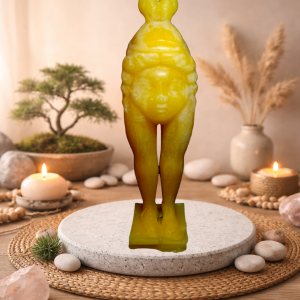
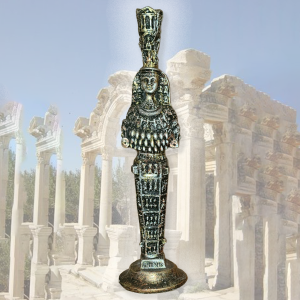
Diana’s influence extended far beyond Rome. In Ephesus, one of the great cities of Asia Minor, she was worshipped in a grand temple—one of the Seven Wonders of the Ancient World. The strange protuberances which cover her may be breasts, or represent the bees that were sacred to her (and made the wax for this candle!). The Biblical Acts of the Apostles describes how St. Paul’s preaching against idolatry provoked a riot there, as silversmiths feared the decline of their trade in statues of the goddess. The crowd shouted, “Great is Diana of the Ephesians!” showing the depth of her devotion in the region, and even now, her image is produced and sold in the same regions. These candles are cast from an original I picked up in Ephesus. Diana is still great!
Additional information
| Weight | 0.07 kg |
|---|---|
| Dimensions | 5.5 × 5.5 × 20 cm |
Vendor Information
- Store Name: Cramberry
- Vendor: Cramberry
-
Address:
28 Tennis Crescent
Toronto ON M4K 1J3 - No ratings found yet!





Reviews
There are no reviews yet.